 DE
DE

What Is MICE? Meaning, Definition & Role in the Hotel Industry
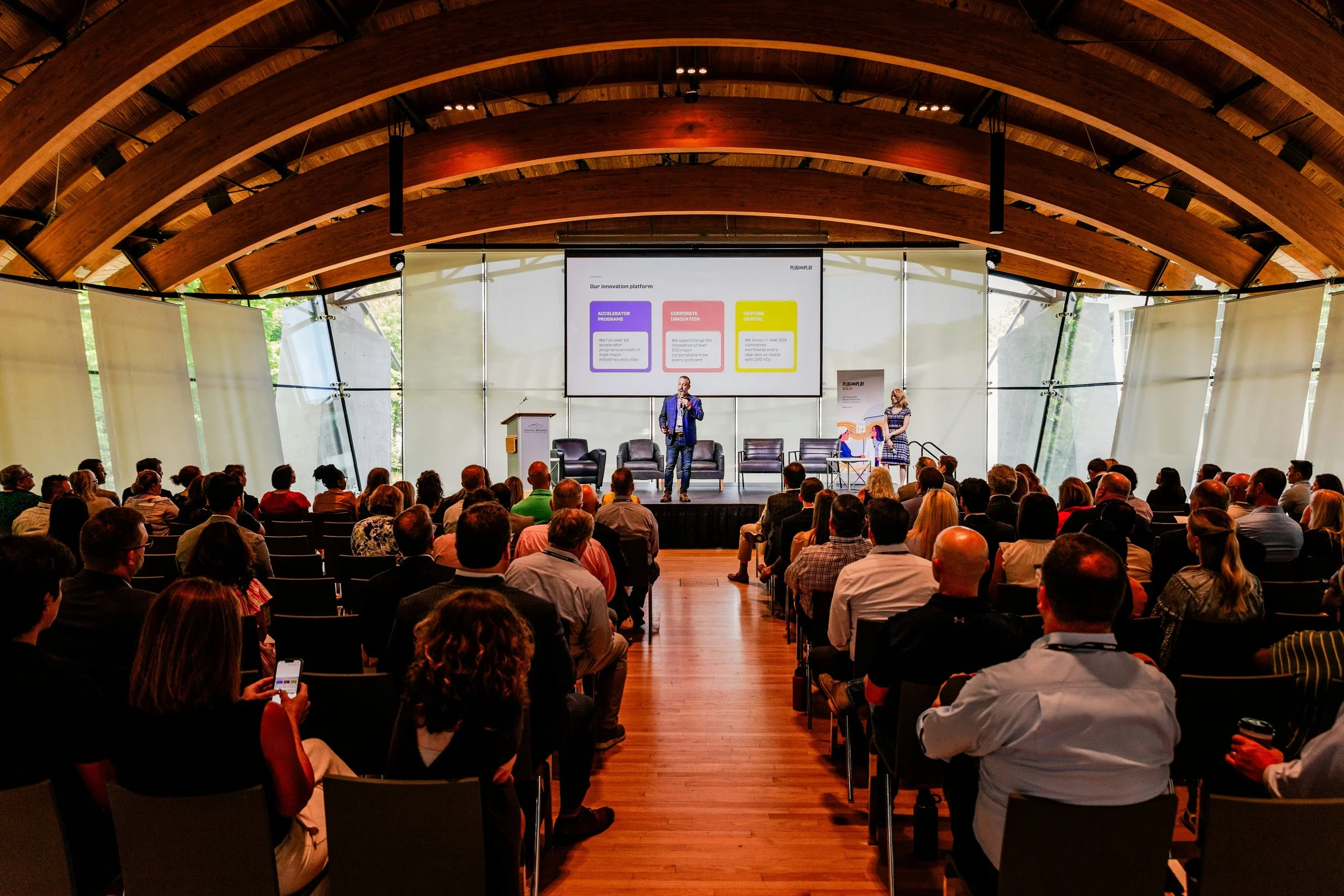
Updated: September 2026 – This article draws on current studies by the Events Industry Council (EIC), Oxford Economics, the GCB Germany’s Meeting & EventBarometer 2024/2025, and the industry definition of the VDVO (German Association of Event Organisers).
MICE – Definition: MICE is the internationally established term for business-motivated events in the hotel and hospitality industry: Meetings, Incentives, Conferences, and Exhibitions/Events.
In the hotel industry, MICE represents a distinct economic sector with a global market volume in the trillions of US dollars and a direct impact on room occupancy, F&B revenue, and overall profitability.
This article provides a comprehensive, research-based overview: from the definition and economic significance of MICE to its operational relevance for hotels, hotel groups, and destinations worldwide.
MICE at a Glance
-
Meetings, Incentives, Conferences, Exhibitions/Events
-
International term for business-motivated group and event formats
-
Hotel with dedicated infrastructure and sales organisation for group and event business
-
USD 0.8–1.2 trillion in direct spending (2024), forecast >USD 2 trillion by the 2030s
-
Revenue diversification, occupancy management, major F&B driver
What Does MICE Stand For? – Definition, Origin, and Scope
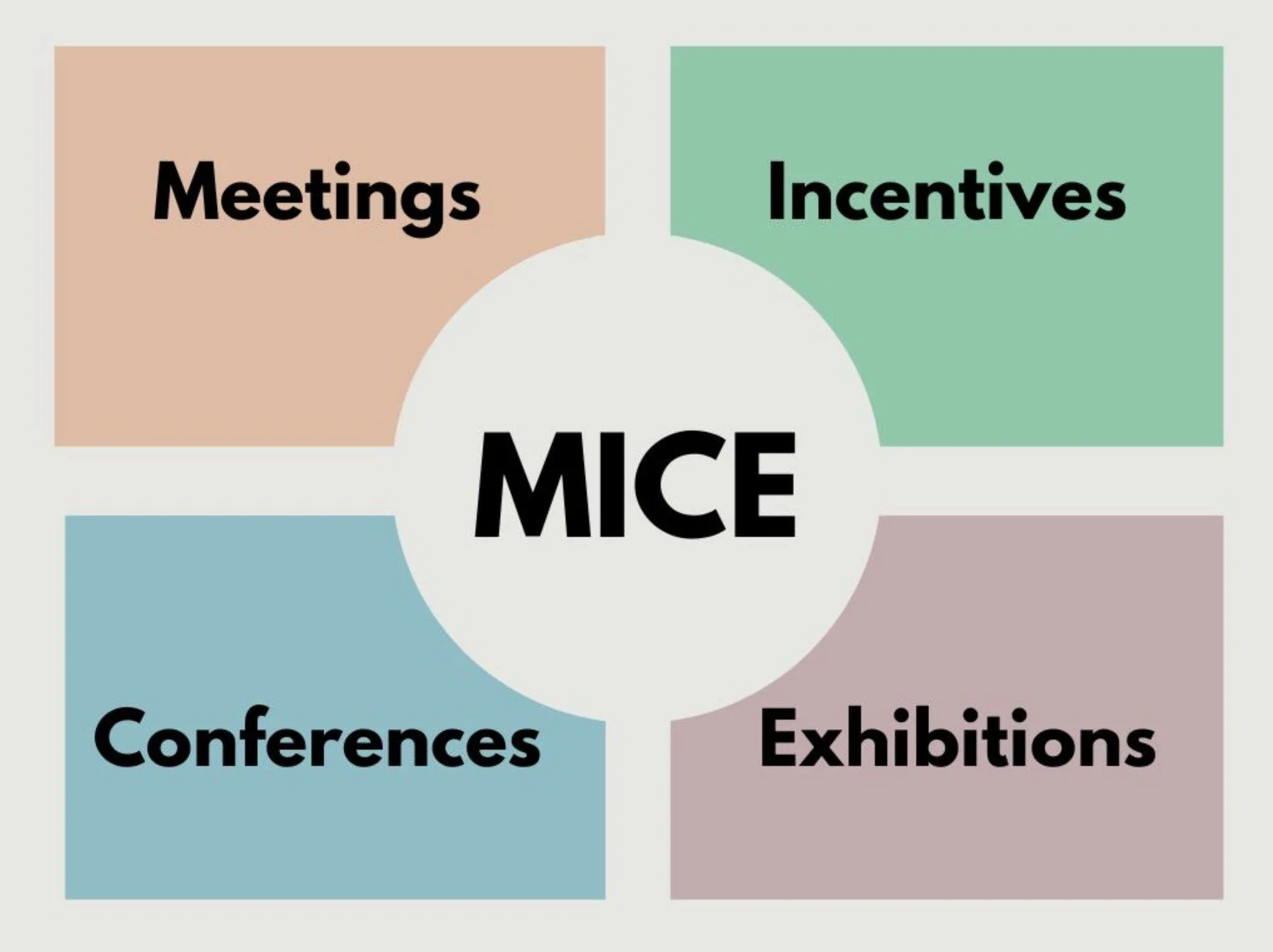
The term “MICE” describes the four categories of business events: meetings, incentives, conferences and exhibitions.
MICE covers four core categories of business events:
M – Meetings: Board meetings, seminars, training sessions, workshops, and smaller conferences. In practice, the highest-volume segment.
I – Incentives: Reward and motivation programmes with an event character – from incentive travel to performance-based events, as defined by the Society for Incentive Travel Excellence (SITE).
C – Conferences / Congresses: Professional conferences and congresses, typically multi-day, with plenary sessions, breakout rooms, and networking formats.
E – Exhibitions / Events: Trade and public exhibitions, as well as sales- and marketing-driven corporate events.
In academic event studies, MICE is classified as part of “Business & Trade Events” and “Meetings & Conventions” (Donald Getz, “Event Studies”; Melanie von Graeve; Irmtraud Schmitt).
The distinction from leisure and private events is clear-cut: MICE exclusively covers commercially motivated formats with a defined client, objective, and measurable outcome.
MICE vs. Business Events vs. Meetings Industry – A Terminology Guide
MICE, Business Events, and Meetings Industry are regional names for the same sector. MICE in Europe and Asia, Business Events in North America and Australia. One of the most common sources of confusion in the global events sector is terminology. The same industry is described by different names depending on the region:
MICE: Widely used in Europe, the Middle East, and Asia-Pacific. The dominant term in hotel sales, destination marketing, and industry communication across these markets.
Business Events: Preferred in North America and Australia. Functionally identical to MICE but positioned as a broader umbrella term.
Meetings Industry: Common in the UK and parts of North America, emphasising the professional meeting and convention segment.
All three terms describe the same economic sector. The differences are regional and linguistic, not substantive. For international hotel operators and destination marketers, understanding this terminology map is essential to avoid miscommunication in cross-border sales and RFP processes.
Key takeaway: MICE, Business Events, and Meetings Industry are regional labels for the same sector. MICE is the most widely used term in Europe and Asia. In the US, “Business Events” is more common.
What Is a MICE Hotel? – Definition, Differentiation, and Strategic Value
In short: A MICE hotel is a property that is strategically set up to attract, deliver, and manage business-motivated group events. It generates a substantial share of its revenue not just from room nights but from combined revenue streams across rooms, meeting space, F&B, technology, and ancillary services.
Unlike a pure leisure or individual business travel hotel, a MICE hotel operates dedicated meeting and conference facilities, professional event infrastructure, and a specialised convention sales team.
How MICE Differs from Leisure and Individual Business
The segmentation is fundamental to a hotel’s revenue strategy:
Leisure: Leisure travellers, primarily room revenue, high seasonality, price-sensitive.
Individual Business: Solo business travellers, room revenue plus ancillary spend, relatively stable but limited in scalability.
MICE: Group business with multiple revenue streams (rooms + F&B + space rental + AV technology + services). Higher predictability, higher average revenue per booking, longer lead times.
Strategic Impact on Revenue, Occupancy, and F&B
MICE delivers three core advantages that no other segment offers in combination:
Revenue diversification: While leisure and individual business primarily drive room-night revenue, a single MICE booking generates income across all revenue lines – rooms, F&B, space rental, AV technology, parking, and ancillary services. In many city and airport hotels, MICE contributes up to 40% of total revenue and a disproportionate share of gross operating profit.
Occupancy management: MICE bookings systematically fill occupancy gaps on weak weekdays (Sunday to Wednesday) and during off-peak seasons. The Meeting & EventBarometer 2024/2025 confirms that business events dominate the event mix in conference hotels.
F&B contribution: MICE is the single most important driver of F&B revenue outside of à la carte dining in most full-service hotels. Coffee breaks, lunch buffets, conference dinners, banquets, and gala evenings generate significant revenue with predictable margins.
The Operational Challenge: Convention Sales Efficiency
The operational reality in convention sales at many hotels is characterised by manual enquiry handling, fragmented systems, and slow response times.
The MICE DESK Benchmark Report (June 2026, a survey of German conference hotels) shows the scale of the problem: only 2% of hotels conducted a needs assessment before sending a proposal - down from 35% in the March 2025 edition. Proposal timing has also polarised: 53% of proposals now arrive only after more than 48 hours, and the reliable 24–48 hour window has disappeared entirely (24% → 0%). Not a single hotel in the survey delivered a proposal that was both fast and needs-based - down from 8% previously.
For many MICE hotels, the implication is clear: without process automation in convention sales, a significant share of demand potential remains untapped. As enquiry volumes grow and response time expectations tighten, an increasing number of hotels turn to specialised convention sales automation platforms to close this gap.
One example is MICE DESK, whose Rocket platform uses AI to automate the entire enquiry-to-proposal workflow. Hotels using the platform report processing times reduced by a factor of 15 and conversion rate increases of up to 32%. As a purpose-built hotel MICE software, Rocket connects the entire RFP-to-booking process in a single system.
Frequently Asked Questions About MICE Hotels
What is the difference between a MICE hotel and a regular hotel?
A MICE hotel operates dedicated meeting facilities, professional event technology, and a specialised convention sales team. Revenue is generated primarily through combined group and event packages rather than individual room bookings.
What is the difference between MICE and business travel?
Business travel refers to individual trips with a focus on single bookings. MICE covers business-motivated group events – with meeting space, F&B services, and event support as integral components.
Why is MICE so profitable for hotels?
MICE bookings generate multiple revenue streams (rooms, F&B, space rental, technology, services) in a single transaction and fill occupancy gaps on weak weekdays and during off-seasons. The gross profit per booking is significantly higher than for individual travellers.
Is MICE the same as Business Events?
Yes, in substance. MICE is the established term in Europe and Asia. In North America and Australia, the same sector is more commonly referred to as “Business Events” or “Meetings Industry.”
Why Is MICE Economically Significant?
Globally, MICE represents an estimated USD 0.8–1.2 trillion in annual direct spending - a scale most industry outsiders underestimate.
Global Market Dimension
The most authoritative global reference is the “Global Economic Significance of Business Events 2023” study by the Events Industry Council (EIC) in partnership with Oxford Economics. Key figures for the 2019 benchmark year:
1.6 billion participants in business events worldwide
USD 1.15 trillion in direct spending (event production, travel, exhibitors)
10.9 million direct jobs
USD 2.8 trillion total output including indirect and induced effects
Scale: comparable to the 13th-largest economy in the world by GDP
Current market forecasts (Zion Market Research, Fortune Business Insights, Grand View Research, and others) estimate the global MICE market at USD 0.8 to 1.2 trillion in annual direct spending for 2025.
Projected growth exceeds USD 2 trillion by the 2030s at a compound annual growth rate (CAGR) of 7 to 11%. Europe holds approximately 51.7% of the global market according to Fortune Business Insights.
Germany as a Global MICE Benchmark Market
Among the world’s MICE markets, Germany stands out as one of the most transparent and data-rich – making it a valuable reference point for understanding the dynamics and scale of business events globally.
Market volume: The meta-study “The Macroeconomic Significance of the Event Industry” (R.I.F.E.L./IGVW/TU Chemnitz, 2020) estimates the German event economy at approximately EUR 130 billion in annual revenue and around 1.5 million jobs.
The IGVW study “Mapping the Event Industry” (2021) reports EUR 80.7 billion in revenue and EUR 43.6 billion in gross value added for the core sector. Business events and MICE-related services account for a substantial share of this output.
Post-pandemic recovery: According to the Meeting & EventBarometer 2024/2025 (GCB/GNTB/EVVC), Germany hosted 2.02 million in-person events with 378 million attendees in 2024 – approximately 90% of the pre-crisis 2019 level.
8.9 million MICE trips led to Germany in 2024, representing 10% of all global MICE travel according to IPK International.
Growth outlook: Both organisers and venues anticipate further growth for 2025/2026, particularly in pure in-person events. The share of international attendees at business events has risen to 11.1% – an indicator of Germany’s increasing attractiveness as a global MICE destination.
These figures illustrate a pattern that applies well beyond Germany: mature MICE markets with strong venue infrastructure, transparent data ecosystems, and professional convention sales operations are recovering fastest and growing most sustainably. For hotel operators and destination marketers worldwide, the German data offers a reliable leading indicator of where the global MICE market is heading.
The MICE Value Chain: Key Players and Industry Structure

The MICE value chain includes all parties involved in planning, preparation, execution and follow-up of business and trade events.
The MICE industry encompasses a broad ecosystem of stakeholders. The VDVO – the German Association of Event Organisers (Verband der Veranstaltungsorganisatoren e.V.) – provides one of the most comprehensive industry definitions in Europe: the meeting and event industry includes all parties involved in planning, preparation, execution, and follow-up of business and trade events.
The value chain comprises four levels:
1. Clients (buyers): Corporations, associations, chambers of commerce, professional societies, public institutions, and international organisations.
2. Planners and intermediaries: Corporate meeting and event planners, PCOs (Professional Congress Organisers), event and live communication agencies, incentive agencies, DMCs, MICE venue finders, and RFP platforms.
3. Venues and service providers: Convention and conference centres, exhibition companies, conference hotels, and special event locations.
4. Infrastructure and service partners: AV technology, exhibition and stage construction, catering, transport, event IT, streaming and hybrid technologies, security, and ancillary programming.
The defining characteristics of MICE events in this framework: focus on business and trade events with the objectives of knowledge exchange, business development, and know-how transfer – combined with experiential elements and entertainment.
Target audiences span both B2B and B2C, particularly in exhibitions and marketing events.
The Global Definition Gap in the MICE Industry
One of the structural challenges facing the MICE sector worldwide is the absence of a unified, robust definition that is used consistently across industry bodies, markets, and geographies. Whether in Europe, the Americas, or Asia-Pacific – the lack of a shared framework makes it difficult to compare market sizes, align advocacy efforts, or secure appropriate recognition in official economic statistics.
This is not a theoretical concern. Without a consistent definition, the MICE industry remains systematically underrepresented in public data – which weakens its position in policy discussions, funding decisions, and infrastructure planning.
In the German-speaking market, the VDVO (German Association of Event Organisers) has taken a leading role in addressing this gap, working towards a standardised, evidence-based industry definition. The initiative was significantly driven by Bernd Fritzges, who served as VDVO board chairman from 2015 to 2025 and built the association’s definition and advocacy work during that period.
The objective – and one that resonates with MICE professionals globally – is an industry definition that enables stakeholders to substantiate the sector’s economic significance with reliable data, vis-à-vis policymakers, public administrations, and the broader public.
The outcomes of this work now inform industry communication in Germany and underpin studies such as the Meeting & EventBarometer and IGVW surveys. Fritzges is today CEO and founder of MICE DESK – a perspective shaped by a decade of working on industry structure and standards at the association level.
MICE Segmentation in Hotels: How Properties Manage Group Revenue
Major international hotel chains differentiate MICE business internally into operational sub-segments, primarily for revenue management and sales targeting:
Residential Seminar: Smaller groups with room blocks, meeting space, and F&B – typical for training sessions and workshops.
Convention: Large-scale events with extensive room blocks, multiple meeting spaces, and complex F&B programmes.
Professional Group: Pure room group blocks without meeting space requirements.
One-Day Meeting / Meeting Room Rental: Day events with meeting space and optional F&B, typically without overnight stays.
Incentive / Sports / Roadshow: Specialised formats with high service intensity and customised requirements.
These categories are not academic definitions but practical subdivisions that hotels use for pricing, capacity management, and sales prioritisation.
The challenge for convention sales teams lies in managing distinct enquiry, proposal, and contract processes for each sub-segment efficiently – a core operational problem that is increasingly addressed through automation technology.
The Future of MICE: Trends and Strategic Developments
The MICE industry has undergone structural change since the COVID-19 pandemic. Current research and market dynamics point to four key trends:
Return to in-person with new quality standards: The EventBarometer 2024/2025 data is unambiguous: in-person events dominate again. Hybrid formats have established themselves as a supplement, not a replacement.
The 378 million in-person attendees in Germany alone in 2024 – as one of the world’s leading MICE markets – demonstrate a near-complete market recovery.
Internationalisation: The share of international attendees is rising – reaching 11.1% for business events in Germany. For hotels globally, this means MICE sales and communication must increasingly function across languages and channels.
Automation and AI in convention sales: Operational inefficiency in the enquiry and proposal process is one of the largest growth barriers in MICE hotel sales.
AI-powered solutions – from automated enquiry processing to AI-supported revenue management – are set to become industry standard within the next few years. Hotels that fail to leverage this technology will lose market share to faster competitors.
Data-driven management: The availability of granular market and performance data enables more precise management of MICE business – from pricing and capacity planning to forecast accuracy.
Integrating MICE data into the broader revenue management strategy is becoming a decisive competitive differentiator.
MICE Definition at a Glance
Question |
Answer |
|---|---|
What does MICE stand for? |
Meetings, Incentives, Conferences, Exhibitions/Events |
What is MICE? |
Internationally established term for business-motivated group and event formats |
What is a MICE hotel? |
Hotel with dedicated infrastructure and sales organisation for group and event business |
Global market volume |
USD 0.8–1.2 trillion in direct spending (2023/2024) |
Germany as benchmark |
EUR 130 bn event economy, 2.02 million in-person events in 2024 |
Industry definition |
All parties involved in planning, executing, and following up business and trade events |
Relevance for hotels |
Strategic core segment: revenue diversification, occupancy management, F&B driver |
MICE vs. Business Travel |
MICE = group events with F&B/space; Business Travel = individual business trips |
MICE vs. Business Events |
Same sector, different regional label. MICE = Europe/Asia; Business Events = US/Australia |
Conclusion: MICE as a Strategic Revenue Lever
MICE is neither a buzzword nor a niche segment. It is a global economic sector measured in trillions of dollars, a central revenue driver for the hotel industry, and a market with a clearly positive growth trajectory.
For hotels that approach MICE strategically and manage it operationally, the segment represents one of the most powerful levers for revenue, profitability, and market positioning.
The challenge lies not in demand but in the operational ability to convert that demand into revenue efficiently. Hotels that automate their convention sales processes, radically reduce response times, and adopt data-driven management will disproportionately benefit
Sources: This article is based on study data from the Events Industry Council / Oxford Economics (2023), the GCB Meeting & EventBarometer 2022/2023 and 2024/2025, the IGVW study “Mapping the Event Industry” (2021), the R.I.F.E.L. / TU Chemnitz meta-study (2020), and market analyses by Zion Market Research, Fortune Business Insights, and Grand View Research. The industry definition follows the VDVO – Verband der Veranstaltungsorganisatoren e.V. (German Association of Event Organisers). Proposal-handling benchmarks are based on MICE DESK's own survey of German conference hotels, the MICE Benchmark Report (June 2026, March 2025). Some of the images in this article are from Unsplash.