 DE
DE

Hotel Sales Forecast: Why Last Year's Numbers and Gut Feeling Are Not Enough.
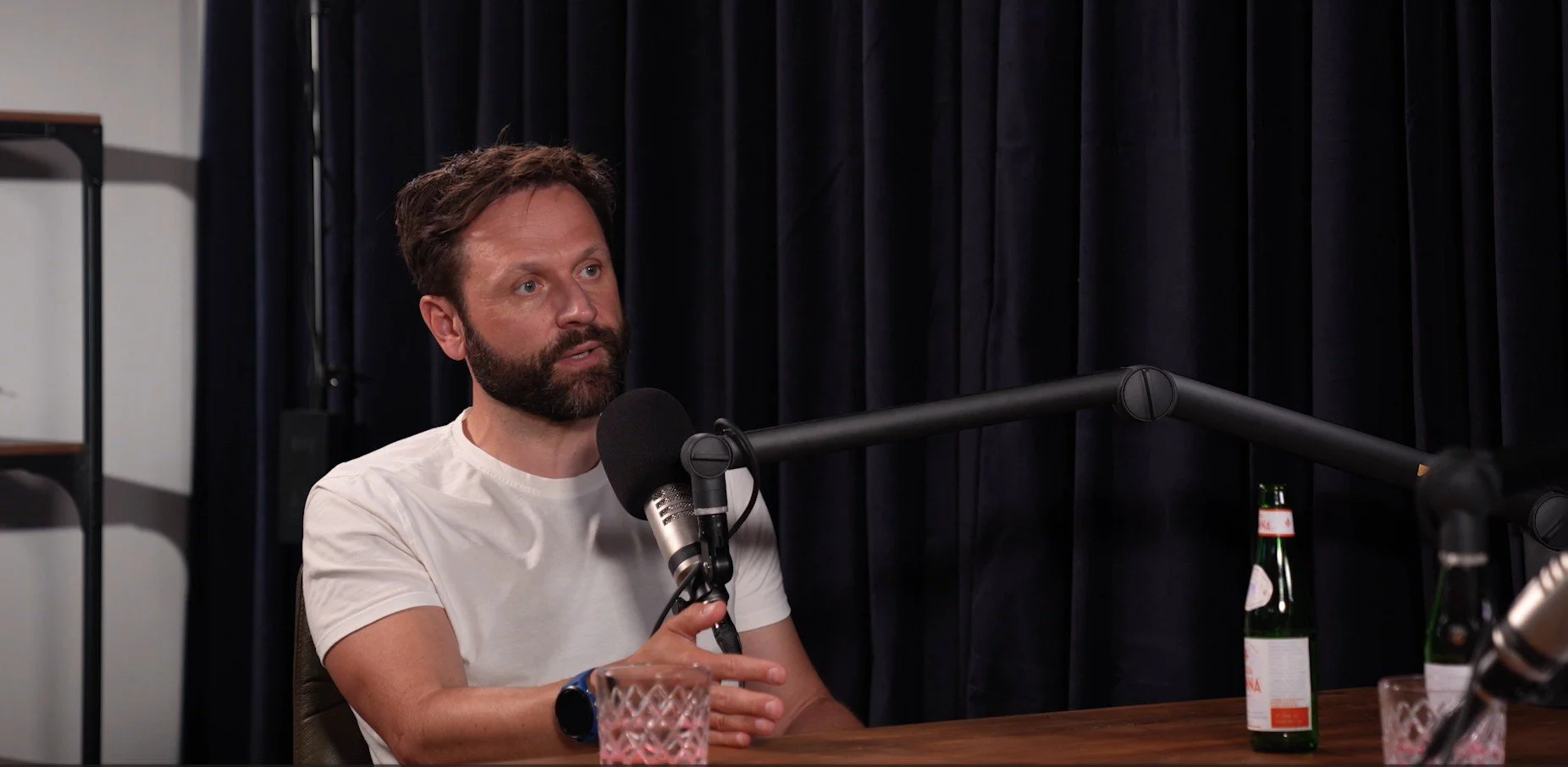
Bjoern Schaefer on the podcast “The MICE Mindset”: a forecast needs data, not gut feeling.
Why do hotel sales forecasts miss so often? Because in most properties they are built from a mix of spreadsheets, prior-year figures and gut feeling, on top of a fragmented system landscape that barely yields consolidated data. Sales expert Bjoern Schaefer explains how to do it better in the episode “Your forecast is wrong. Why sales in the hospitality industry need to be reconsidered. - The MICE Mindset”. He helped build the B2B business of Urban Sports Club and has since advised, by his own account, more than 150 B2B start-ups. In conversation with Bernd Fritzges, CEO of MICE DESK, he shows how hotels in group and convention sales (MICE, meaning meetings, incentives, conferences and events) arrive at a reliable revenue forecast.
What is a hotel sales forecast?
A hotel sales forecast is a projection of revenue that will be closed in the future, typically for the current month and the current quarter. As a rolling forecast, it adds a projection that uses the early indicators in the pipeline to estimate the revenue range the hotel is likely to reach by year end. In doing so, it connects sales steering with the finance plan and the business plan.
“At its core, a forecast is the projection of revenue that will be closed in the future. The first question is simply: what do I close this month, what do I close this quarter?”
- Bjoern Schaefer
For Schaefer, the real value lies in the outlook: “The earlier I gain clarity on whether we will hit our targets or not, the more measures I can still put in place.” Anyone who spots the gap to the annual target in the first quarter, he says, has far more room to act than someone who notices it only after the summer.
Who is Bjoern Schaefer?

About our interview partner:
Bjoern Schaefer helped build the international B2B business of Urban Sports Club, by his own account to more than 20 million euros in revenue in the B2B unit alone, across six countries. Since then he has, by his own account, supported more than 150 B2B start-ups through the shift from unstructured to predictable growth. He is the author of the book “Funky Flywheels” and host of the “Funky Flywheels Show” podcast. MICE DESK has also worked with Schaefer on its own sales process. More on that later.
Why traditional hotel forecasts fail
Traditional hotel forecasts rarely fail for lack of effort. They fail on the data foundation. They are built from prior-year figures, spreadsheets and gut feeling, while a single group enquiry travels through six or seven different systems. The data a valid forecast needs sits scattered across data silos.
“I place relatively little trust in prior-year figures and spreadsheet models. What interests me is: what is a valid data source? What reliable data sources do I have in house?”
- Bjoern Schaefer
Schaefer's first question to a director of sales who wants to fix the forecast is therefore not “What does your process look like?” but “Where do the numbers come from?” Data foundation first, process second. Seasonality can be built in. A forecast that is essentially carried forward from last year, however, remains a continuation of the past.
Bernd Fritzges has seen first-hand what happens when the forecast only tips once it is too late, back when he was on the buying side, around a football World Cup. The governing body had blocked room allotments in the host cities, so event business barely reached the hotels. At the last minute the allotments were released again on favourable cancellation terms, and suddenly the houses sat below capacity. The result: salespeople called “four weeks before panic sets in” with special offers. For event business, three to four months too late.
“That is the classic reflex. You see the forecast will not be hit, so out goes the sales team to prospect. And by then, for MICE, it is already too late.”
- Bernd Fritzges
The three components of a reliable forecast
A reliable hotel sales forecast rests on three components: the length of the sales cycle, the win probability and the average basket value, each viewed separately by segment. Only the combination of the three turns a pipeline total into a genuine projection.
The sales cycle answers the question: when does the customer close? In hospitality, the event date provides a natural anchor. Schaefer: “I know fairly precisely when the event is meant to take place. From there I roughly know when it will close, and in financial planning I can see when the cash will arrive.”
Win probability is the second component, and it is the one most prone to self-deception:
“On what basis does the win probability come about? From the subjective sense of the individual rep? Or are there other data sources, a qualification logic?”
- Bjoern Schaefer
This is precisely the qualification logic Schaefer introduced at MICE DESK. The sales process had previously been organised into task packages, first call made, second call made, without distinguishing whether a customer had serious intent. Today a qualification logic governs how likely an opportunity is to actually close.
The third component is the average basket value. A boardroom for six people is booked today for tomorrow, a conference for 600 is not. Different baskets mean different sales cycles and different win probabilities. That is why the three components only work when applied per segment.
Segmentation: why the standard value list is not enough
The standard hotel segments, such as MICE and conference & events, wholesalers and tour operators, government, crew and airline, and contract, are a company segmentation. A reliable forecast also needs cuts by basket value and product, because within the same company segment order values can differ completely.
“Is a classic company segmentation enough to segment my revenue volumes? Probably not. It does not have to be perfect, but it has to be different enough to be significant.”
- Bjoern Schaefer
How does a hotel find these cuts? Schaefer's answer: with its own historical data, in hindsight. “Often 80/20 is enough. Look at the existing data: what sales cycles have we had, what win probabilities, what basket values?” Past deals almost always reveal patterns, for example groups of basket value A, B and C that differ clearly.
Hotels hold a structural advantage here. Their standard operating procedures already break reactive selling into clear phases, from enquiry through needs analysis and proposal to contracting. What is missing is not data or process discipline, but the consolidation of that data.
The control question for general managers
The single most useful control question for a director of sales is this: how large was the variance between the forecast submitted at the start of the month and the revenue actually realised at the end of the month? Look at it across the last three to five months, then in a second step by segment. This one analysis reveals whether a forecast is reliable or merely asserted.
“What I would want to know is how large the variance was between the forecast I submitted at the start of the month and the actual revenue at the end of the month. I would look at that across the last three, four, five months.”
- Bjoern Schaefer
If the deviation stays consistently high, the second step is to examine the variance by segment to narrow down the cause. Schaefer names a fair caveat himself. If a single large deal slips from one month into the next, it can distort the monthly variance considerably. Such cases belong under separate review.
The prerequisite: consolidated data
Without consolidated data, every forecast remains piecemeal. For Schaefer, a central data source is “essentially without alternative”, the only question being the proportion in which it is built. In hospitality, forecasting does not fail on data volume. Properties and groups receive dozens to hundreds of group enquiries a day. It fails on data silos.
This is exactly where MICE DESK comes in. Rocket AI, the platform for group and convention sales, consolidates the data at the very start of the process, from the incoming enquiry to the proposal, and makes it usable for revenue forecasting. In an internal process study, proposal creation fell from 72 minutes to under 9. A steadily growing number of hotels works with the platform today. To see how this looks in your own property: in a demo we walk through a real group enquiry and show how consolidated enquiry data becomes a reliable basis for the forecast.
Frequently asked questions on hotel forecasting
What is a rolling forecast?
A rolling forecast is a continuously updated revenue projection that, beyond the current month and quarter, includes a projection toward the annual target. From the early indicators in the pipeline it derives the revenue range the business is likely to reach by year end. This makes it possible to act early, rather than reacting only once the target has already been missed.
Why are prior-year figures not enough for a hotel forecast?
Prior-year figures describe the past, not the current pipeline. They do not capture special effects such as major events, shifting demand channels or allotments released at short notice. A reliable forecast instead needs current, dependable data sources from the property itself: live enquiries, sales cycle lengths, win probabilities and basket values by segment. Seasonality can be layered in, but the prior year is no basis on its own.
How do I check whether my forecast is reliable?
Compare the forecast submitted at the start of the month with the revenue actually realised at the end, across the last three to five months. A simple table with the columns submitted, realised and percentage deviation is enough. If the variance stays consistently high, examine the deviation by segment in a second step to narrow down the cause. Single large deals that slip into the following month should be reviewed separately.
What data does a hotel need for a valid forecast?
Three metrics per segment: the length of the sales cycle, meaning the time from enquiry to close, the win probability based on a qualification logic rather than gut feeling, and the average basket value. The prerequisite is a consolidated data foundation. In hospitality this information often sits scattered across several systems, even though there is no shortage of enquiry data. Even an 80/20 review of existing data yields usable starting values.
What is the difference between a forecast and a business plan?
The business plan sets targets top down, often before reliable sales data exists. The forecast is the data-based projection from the actual pipeline: what is likely to close this month, quarter and year? A forecast that merely echoes the business plan is not a projection but a hope. In the rolling model the two connect: the forecast shows continuously whether the planned targets remain within reach.
About Bjoern Schaefer
Bjoern Schaefer helped build the international B2B business of Urban Sports Club (by his own account to more than 20 million euros in revenue in the B2B unit, six countries) and has since advised more than 150 B2B start-ups. He is the author of the book “Funky Flywheels” and host of the “Funky Flywheels Show”.
About the podcast episode
The full conversation between Bjoern Schaefer and Bernd Fritzges is available in the episode “Your forecast is wrong. Why sales in the hospitality industry need to be reconsidered“ of the podcast “The MICE Mindset”. On YouTube: https://youtu.be/0JMtEFlJXYE | On Spotify: https://open.spotify.com/episode/08pLjnrlgCY0AZbItcJTte | The episode was recorded in German.
Published on: June 11th 20026 | Content as of: June 2026
Further Readings
Hotel Group Sales Profitability: Why Full Event Spaces Don’t Mean Higher Margins
How hotels make ROI in the MICE sector measurable and profitable
Revenue management paradox in the MICE segment: How hotels are tapping into revenue potential with convention sales automation