 DE
DE

Group Sales Software: How Hotel Proposal Automation Wins More Business
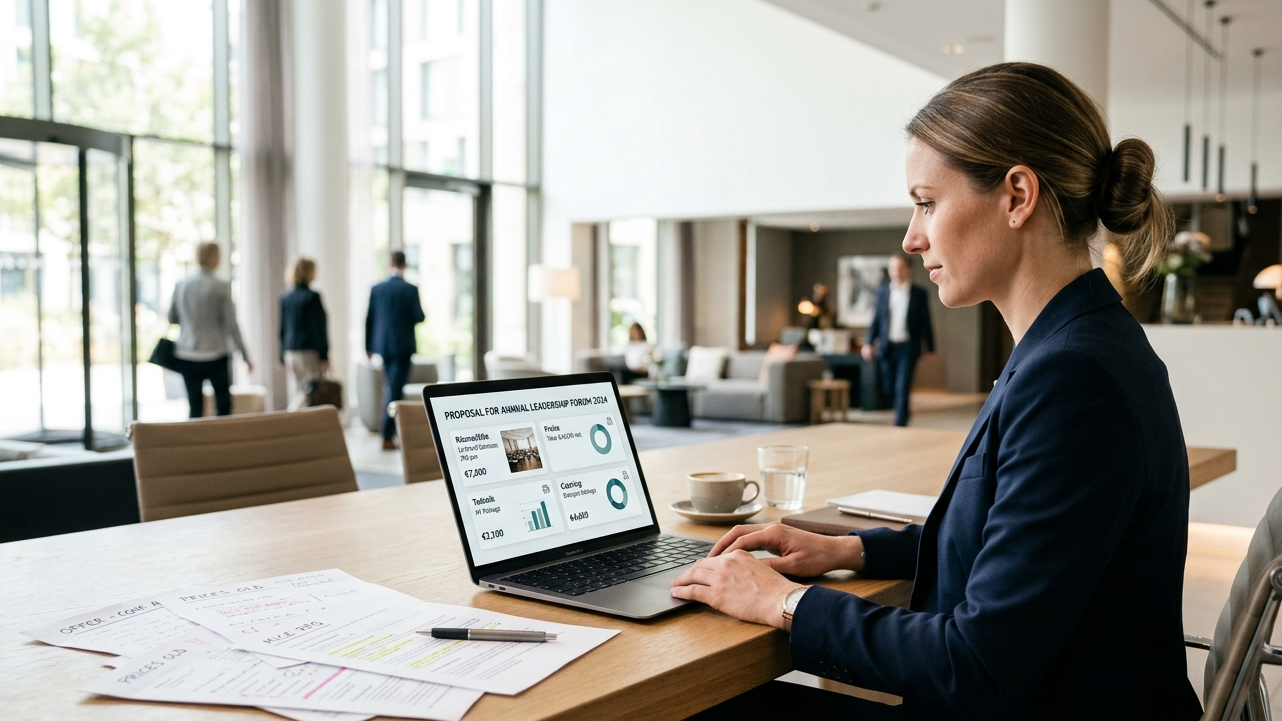
Hotel proposal automation: all information at a glance instead of PDF chaos. (The image is AI-generated.)
A planner receives a hotel proposal as a Word export or PDF. Rooms, pricing, AV, catering – scattered across multiple pages without clear structure. Modern meeting management software and event management software solve this by replacing static documents with dynamic, structured formats. Yet most hotels still rely on manual processes: when planners want changes, they send an email. The hotel reviews, adjusts, exports a new version. Three days later, another change request arrives. This back-and-forth wastes time, ties up resources, and creates errors. Group sales software with hotel proposal automation eliminates this friction – without sacrificing personalisation.
About the interview partner:
Corinna Siebrecht is an independent consultant for sales, marketing, and MICE in the hospitality industry. With over 25 years of sales experience, she brings an extensive industry network and deep expertise in strategic market development. Her focus areas: sustainable sales success, long-term client relationships, and digitalising sales processes.
What is a structured proposal format? A structured proposal format is a digital proposal that presents all relevant information – rooms, pricing, AV, catering, images – in a unified, comparable structure. Unlike static PDFs, it enables interactive elements like one-click change requests and provides the hotel with data on user behaviour. MICE (Meetings, Incentives, Conferences, Events) proposals require this level of structure because planners compare multiple venues simultaneously.
Why Traditional Hotel Proposals Slow Down Group Sales
Traditional hotel proposals as PDFs or Word exports are static, hard to compare, and create manual work with every change request.
Most hotels still create proposals as merge documents – a process that can be automated without losing the personal touch: data from the PMS gets pulled into a Word template, exported as PDF, and emailed out. The result is a static document the recipient needs to print to discuss internally.
For planners, this means information is difficult to compare. Anyone requesting proposals from multiple hotels must work through different formats, structures, and levels of detail. Rooms are named differently, pricing is displayed differently, inclusions are listed differently.
“This is what B2B customer loyalty really means: less romance, more friction reduction.”
Siebrecht puts it plainly: planners don’t choose the hotel with the nicest cover letter. They choose the hotel where the process requires the least effort.
What Planners Actually Need From a Meeting Management Platform
A good meeting management platform answers all relevant questions at a glance: rooms, pricing, AV, catering – structured and comparable.
The structure must allow planners to get a quick overview first, then drill into details – images, floor plans, perhaps even 3D visualisations. Not the other way around. Anyone who has to read ten pages before understanding what’s being offered loses time – and often interest.
“UX is exactly that: clarity plus trust plus less effort.”
What Siebrecht describes applies to every touchpoint between hotel and planner. But nowhere is it more decisive than in the proposal – the moment when the planner decides whether to invest further or move on to the next vendor.
Why B2B Decisions in Convention Sales Are More Emotional Than You Think
Many hotels treat convention sales as a purely rational transaction: RFP in, proposal out, decision based on price. In reality, planners work under time pressure, with multiple internal stakeholders, and the constant fear that something will go wrong at the event.
“B2B is often even more emotional – just differently: risk minimisation, security, clarity, trust.”
When a proposal is confusing, it signals to the planner: this is going to be complicated. When changes are painful, they think: working with this hotel will be exhausting. These aren’t rational considerations – but they decide who wins the business.
Faster RFP Response Through Automated Change Workflows
Change requests are the biggest time drain in the proposal process – automated workflows reduce effort by up to 80%.
The planner wants a different room, a different setup, different catering – especially when hotels are simultaneously trying to prioritise group inquiries. In the traditional process, they send an email, the hotel checks availability, adjusts the document, exports again, sends it back. For complex requests, this repeats multiple times.
Structured proposal formats solve this problem: planners see all options at a glance and can request changes with a single click. The system recognises the request, automatically checks feasibility, and updates the proposal – without anyone manually opening a Word document. The result: significantly faster RFP response time – without sacrificing quality.
“When a planner changes the AV configuration three times and then sticks with the premium option, we learn more about their priorities than from ten phone calls. We capture these signals in real time – and sales immediately sees where genuine interest lies.”
– Tigran Manvelyan, CTO and Co-Founder, MICE DESK
Why Visual Feedback Accelerates Decisions
MICE events thrive on imagination: How will the room look? Does the setup suit the attendee count? What does the stage look like? The more a planner can see, the more confident they feel making a decision.
Siebrecht describes this effect:
“Visual feedback reduces uncertainty. When I can see how a room looks, how a setup works, how a schedule fits together logically, the decision feels safer.”
Structured proposals can embed images, floor plans, and links to 3D visualisations directly. Planners don’t have to search for information separately – everything is in one place, in a logical structure.
How Hotels Distinguish Genuine Interest From Comparison Shopping
Digital proposal formats make user behaviour visible: open rates, time spent, and change requests reveal which leads deserve priority.
Not every inquiry becomes a booking. But which ones will? In the traditional process, hotels only know when the planner says yes or no. Before that: silence, at best a follow-up call. Better group inquiry management through data changes this equation.
These signals help sales teams set priorities – and avoid process errors in banquet operations through better data.
“This lets you improve proposals iteratively – and steer your sales: spot hot leads before anyone says yes”, says Siebrecht.
Upselling That Serves the Event
Add-ons don’t sell through aggressive placement – they sell through relevance. When a planner sees that an AV upgrade better supports their hybrid meeting, that’s not a sales trick – it’s a service.
Siebrecht puts it this way:
“Upselling must increase the likelihood that the event succeeds – not just the revenue.”
Structured proposals can display add-on options in the right context: not as an appendix at the end, but where they’re relevant. Theme-based templates help suggest the right options for each event type.
How Group Sales Automation Transforms the Proposal Process
MICE DESK Rocket works as hotel group sales software that replaces traditional PDFs with a structured proposal format. As dedicated hotel MICE software, Rocket keeps proposals, pricing and approvals in one connected system. Hotels create proposals up to 15x faster than with Word templates – with equal or higher quality. All information is complete, clear, and comparable. Planners see everything in one overview and can then dive into details – images, floor plans, links to programme elements or 3D visualisations.
Change requests no longer go through email: with one click on “Request changes”, planners submit their request. The system recognises, validates, and executes the change – in the proposal and directly in connected systems. This convention sales automation eliminates the manual back-and-forth entirely.
Theme-based templates ensure every proposal fits the event type – without the hotel starting from scratch each time.
See in 15 minutes how Rocket creates proposals in under 5 minutes.
Key Takeaways
Confusing proposals signal: working with this hotel will be complicated.
B2B customer loyalty means reducing friction, not building romance.
Email-based change requests waste time – automated workflows save it.
Digital proposals reveal which inquiries show genuine interest.
UX is clarity plus trust plus less effort – especially critical in B2B.
Related Articles:
Process Errors in Banqueting Operations: How Hotels Can Identify and Systematically Avoid Them
How hotels make ROI in the MICE sector measurable and profitable
MICE automation in hotels: What really motivates convention sales teams